
Education Trends 2026 are not just buzzwords; they are the quiet revolution reshaping how we grow, adapt, and thrive. I remember sitting in a lecture hall just a decade ago, scribbling notes that I’d likely never review, wondering if there wasn’t a better way. Today, that “better way” is unfolding at a breathtaking pace.
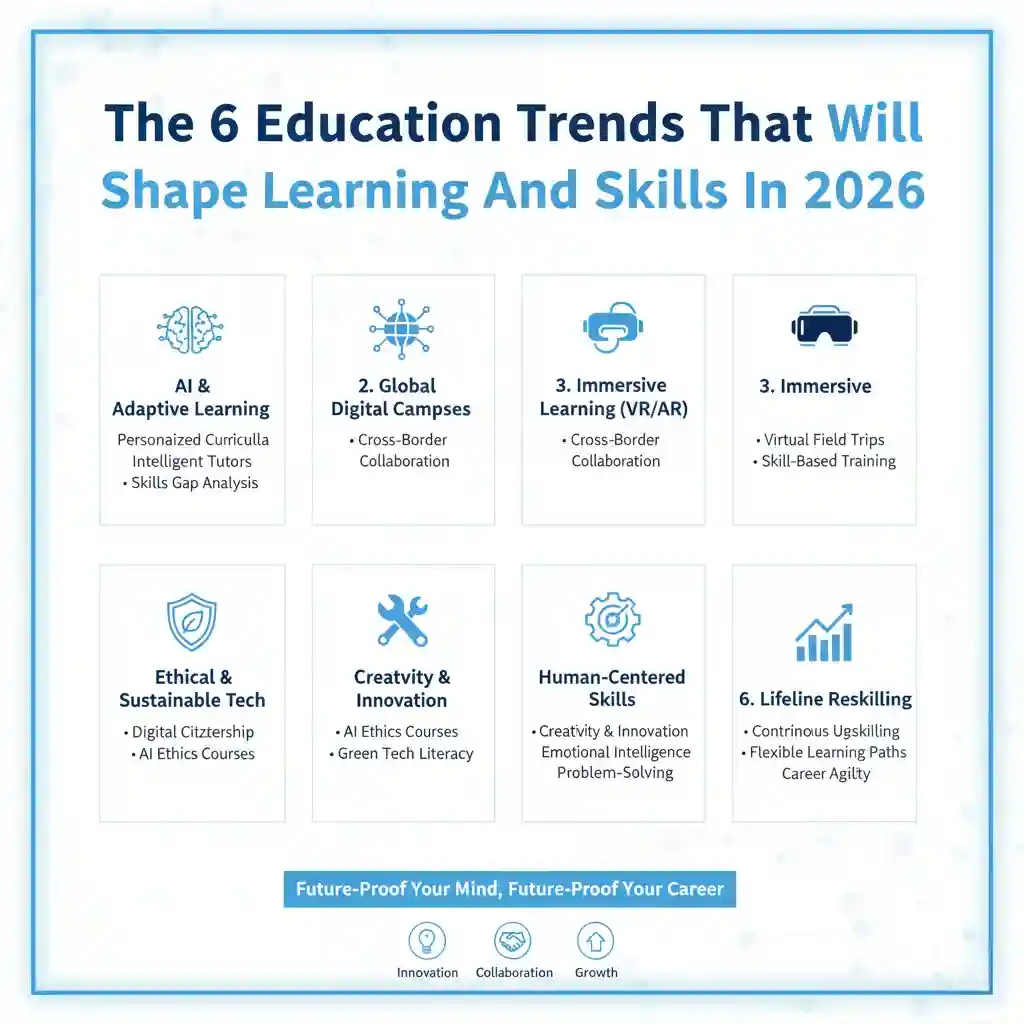
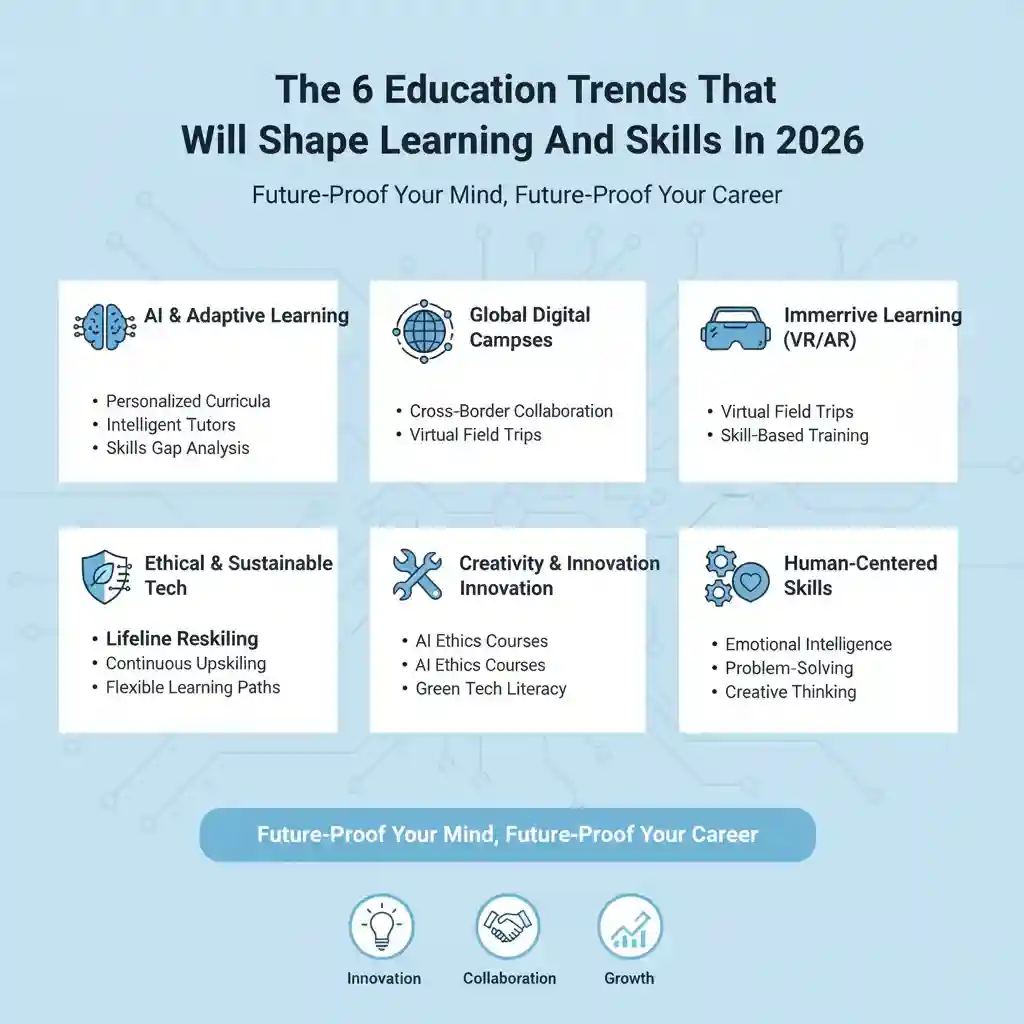
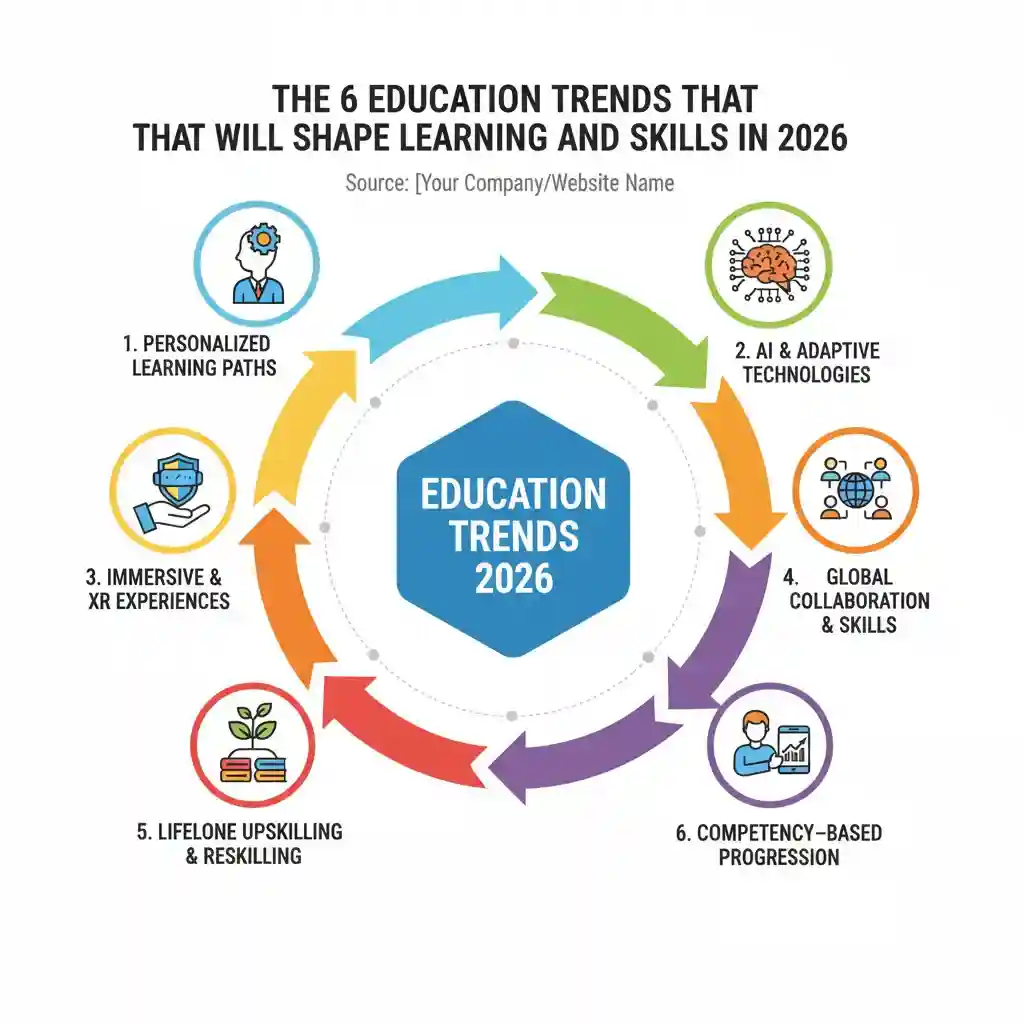
So, what does this mean for you, whether you’re a student, a professional, or a lifelong learner? Let’s pull back the curtain on the six dominant forces that will define knowledge and capability in the coming year.
The Rise of Hyper-Personalized, Adaptive Learning
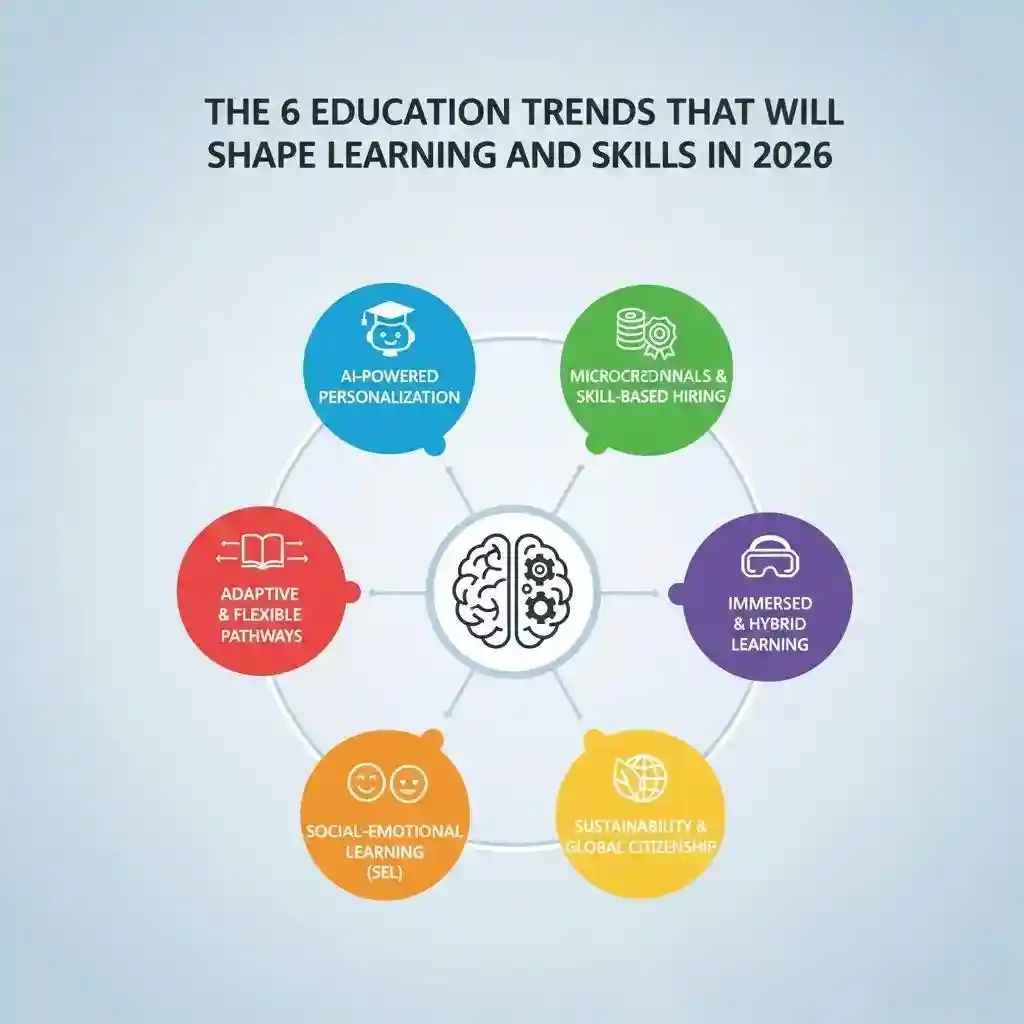
Gone are the days of one-size-fits-all curricula. I recall tutoring a friend who struggled with algebra; the classroom pace lost him by week two, and he never caught up. Today’s most impactful Education Trends 2026 prioritize systems that adapt in real-time. Imagine a platform that identifies your specific knowledge gap on quadratic equations and serves you a custom video, practice problem set, and even a motivational nudge—all before you even think to ask for help.
This shift towards hyper-personalization is powered by sophisticated AI that maps individual learner journeys. It’s less about keeping pace with a cohort and more about mastering concepts at your unique rhythm. These platforms don’t just teach; they learn about you, creating a feedback loop that makes education profoundly personal and effective.
- How to Leverage This Trend: Start by exploring platforms that offer diagnostic assessments and personalized learning paths. Don’t just passively consume content; interact with the adaptive features. The more data you provide (through quizzes, time spent, etc.), the better the system can tailor your journey, keeping you firmly aligned with the core Education Trends 2026.
Micro-Credentials and Skill Stacking Become the New Currency
The monolithic degree, while still valuable, is now complemented by a mosaic of micro-credentials. I have a colleague who transitioned from marketing to data analysis not with a second degree, but by strategically “stacking” certificates in SQL, Python, and data visualization. This modular approach to skill-building is a cornerstone of modern Education Trends 2026.
Employers are increasingly prioritizing demonstrable, specific skills over broad pedigree. Digital badges and nano-degrees from reputable sources offer a agile way to validate your expertise. This trend empowers you to continuously build a portfolio of capabilities that are directly relevant to the market’s immediate needs.
- Choosing the Right Credentials: Focus on stackable skills that build upon each other. Look for programs that offer verifiable digital badges you can share on LinkedIn. This practical approach to professional development is what the most impactful Education Trends 2026 are all about: tangible, applicable, and recognized learning.
Immersive Learning Through AR, VR, and the Metaverse
Remember learning about the Roman Colosseum from a dusty textbook picture? Now, imagine strapping on a headset and standing in the middle of it, hearing the crowd, and observing the architecture to scale. This immersive leap is no longer science fiction; it’s a practical Education Trends 2026 trajectory. From medical students performing virtual surgeries to mechanics practicing on complex engine simulations, XR technologies provide safe, engaging, and unforgettable practice environments.
The power of “learning by doing” is magnified a hundredfold when the doing happens in a rich, simulated world. It reduces risk, lowers costs, and enhances spatial understanding and muscle memory in ways flat screens never could.
- Getting Started with Immersive Tech: You don’t need a high-end setup to begin. Many educational apps now use smartphone-based AR. Explore fields like history, anatomy, or design through these lenses. As this arm of Education Trends 2026 matures, accessing these profound experiences will become as simple as clicking a link.
Best Guide on The 6 Education Trends That Will Shape Learning And Skills In 2026
This video provides a fantastic visual breakdown of how immersive tech and AI are merging to create the next-generation classroom, perfectly illustrating the depth of these Education Trends 2026.
Data Fluency: The Non-Negotiable Foundational Skill
It’s not just about becoming a data scientist. Data fluency is about comfortably interpreting charts, questioning metrics, and making decisions based on evidence rather than gut feeling. In my own work, shifting from saying “I think this performs well” to “The 35% increase in engagement A/B test confirms this performs well” changed everything. This critical competency sits at the heart of key Education Trends 2026.
Educational programs across all disciplines—from humanities to business—are now weaving data interpretation into their core. Understanding how to read a dashboard, grasp basic statistics, and identify data bias is becoming as fundamental as literacy.
- Practical Steps to Build Fluency: Start with everyday data. Critically analyze the metrics on your social media posts or fitness app. Take a short course on data visualization basics. Making data a regular part of your conversational landscape is a direct application of essential Education Trends 2026.
Social-Emotional Learning (SEL) and AI Ethics Take Center Stage
As AI tools become ubiquitous, education is rightly focusing on what makes us uniquely human: empathy, collaboration, and ethical reasoning. The most forward-thinking Education Trends 2026 integrate SEL not just in K-12, but in corporate and professional development. Learning to manage team dynamics, navigate conflict, and exercise ethical judgment in an AI-driven world is paramount.
I honestly wish I had learned more about emotional intelligence and ethical frameworks earlier in my career; it would have saved me from numerous misunderstandings and tough situations. Now, curricula are being designed to build these muscles intentionally.
- Incorporating SEL into Your Growth: Seek out collaborative projects, even online. Practice reflective listening. Engage in case studies about ethical tech dilemmas. This human-centric focus within the broader Education Trends 2026 ensures our technological advancement is matched by our wisdom.
Lifelong Learning Ecosystems and Community-Driven Knowledge
The endpoint of education is disappearing. Learning is now a continuous, community-supported activity. Platforms are evolving into full ecosystems that blend courses, peer networks, mentor access, and project boards. This trend moves beyond isolated content consumption to embedded knowledge application. I’ve found my deepest learning happens not just in a course, but in the subsequent forum debates and project collaborations with fellow learners.
These ecosystems recognize that motivation and mastery are sustained through connection and purpose. They are the structural embodiment of the lifelong learning mindset central to Education Trends 2026.
- Engaging with a Learning Ecosystem: Don’t just be a spectator. Join course communities, participate in challenges, and share your project progress. The network you build is often as valuable as the certificate you earn. Which of these Education Trends 2026 resonates most with your current learning journey?
To bring these Education Trends 2026 to life, consider platforms and approaches that exemplify this fusion:
- Platforms utilizing Education Trends 2026 principles by offering AI-powered, adaptive learning paths.
- Virtual labs and simulations that embody the immersive Education Trends 2026 focus on experiential skill-building.
- Community-driven learning hubs that support the continuous, ecosystem model of modern Education Trends 2026.
Conclusion: Your Invitation to the Future of Learning
The landscape defined by these Education Trends 2026 is dynamic, personalized, and rich with opportunity. It asks us to be proactive architects of our own competence, blending technical skill with human wisdom. The shift from passive recipient to active participant in your education is the single most important takeaway. As you reflect on these six transformative forces, ask yourself: which one skill or trend can you engage with this month to take a confident step forward?
Ready to explore your next learning milestone? Find your next read over on the BlogTime homepage. We’re glad you’re here.
FAQs: Education Trends 2026
- Why are the Education Trends 2026 so important to understand?
Understanding these Education Trends 2026is crucial because they signal a fundamental shift in how knowledge is delivered and skills are validated. They provide a roadmap for personal and professional relevance, helping you invest your learning time and resources wisely in a fast-evolving landscape. - As an individual, how can I keep up with these Education Trends 2026?
Start by embracing a mindset of lifelong learning and curiosity. Follow thought leaders in edtech on social media, subscribe to newsletters from innovative learning platforms, and proactively seek out micro-credentials in emerging areas. The very nature of these Education Trends 2026encourages continuous, modular skill-building. - What is the most surprising aspect of the Education Trends 2026?
For many, it’s the strong emphasis on human skills like social-emotional learning alongside advanced technology. The Education Trends 2026aren’t just about AI and VR; they’re about balancing technological power with ethics, collaboration, and adaptability, ensuring we develop well-rounded capabilities. - How will Education Trends 2026 affect traditional colleges and universities?
These trends are pushing traditional institutions to adapt rapidly. We’re seeing more hybrid learning models, partnerships with industry for credentialing, and curricula updated to include data fluency and ethics. The most agile institutions will integrate these Education Trends 2026to enhance their value rather than be displaced by them. - Are there any risks associated with these upcoming Education Trends 2026?
Potential risks include an over-reliance on technology without human mentorship, and the fragmentation of learning into disjointed micro-skills without deeper conceptual understanding. Navigating the Education Trends 2026successfully requires choosing quality, reputable programs and ensuring a balance between practical skills and foundational knowledge.