
AI automation tools are no longer a sci-fi fantasy; they’re the quiet engine powering the most efficient online businesses today. I remember staring at my screen, overwhelmed by a to-do list that stretched into oblivion—client work, marketing, invoicing, research. The revenue was there, but so was the burnout. That’s when I realized I was trading time for money, a brutal and finite equation. What if you could break that cycle? What if your digital efforts could work while you sleep?
That shift, from being the sole worker to becoming a strategic manager of intelligent systems, changed everything. This isn’t about replacing human creativity; it’s about unleashing it by offloading the repetitive, the tedious, and the time-sucking tasks to a suite of digital helpers. This mindset shift is becoming critical across industries, especially as AI continues to evolve faster than many sectors—most notably retail—can fully understand, adapt to, and strategically apply its capabilities. The right AI automation tools don’t just save minutes; they open doors to entirely new revenue models. Let’s explore how you can harness them.
The Mindset Shift: From Labor to Leverage
My friend Sarah, a brilliant graphic designer, was trapped in the “feast or famine” freelance cycle. She’d land a big project, disappear for weeks, and then scramble to find the next one. Her income was a jagged mountain range. The breakthrough came when she stopped selling just “design hours” and started selling a “brand identity system.” She used AI automation tools to handle her initial client questionnaires, mood board generation based on keywords, and even first-draft logo concepts.
This cut her project kickoff time in half. Suddenly, she could handle more clients, or better yet, package her process into a digital product. Her labor became leveraged. This is the core principle: these tools provide the leverage to amplify your unique skills and time.
Identifying Your Income-Automation Sweet Spot
The first step isn’t buying software; it’s auditing your life or business for automation opportunities. Look for tasks that are:
- Repetitive and rule-based (e.g., social media posting, email sorting).
- Data-heavy and analytical (e.g., market research, performance reports).
- Creatively draining but necessary (e.g., writing product descriptions, basic image editing).
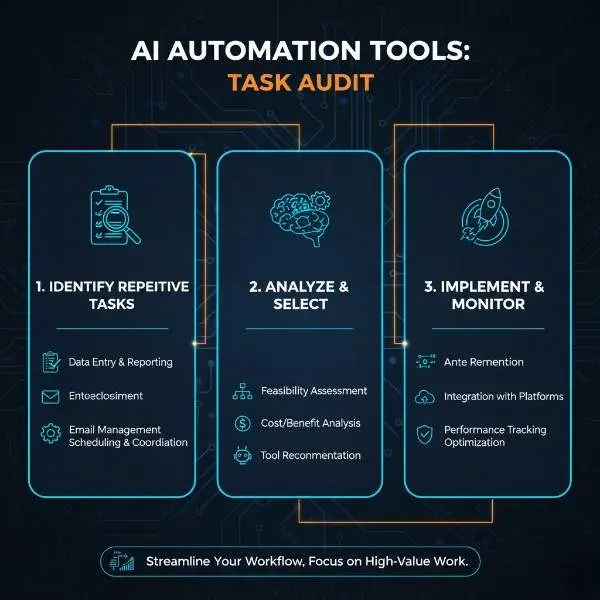
For instance, an affiliate marketer might spend hours writing round-up reviews. An AI writing assistant, a key category of AI automation tools, can generate draft content based on product specs, which the marketer then polishes and infuses with personal experience. The tool didn’t write the final article; it automated the heavy lifting.
Revenue Stream 1: Content & SEO Automation
Content is king, but its production can be a tyrannical time-sink. This is where AI automation tools shine, not as replacement writers, but as force multipliers.
Building a Content Machine
Imagine you run a niche website about sustainable living. Your goal is consistent, SEO-optimized content. Here’s a potential automated workflow:
- Topic & Keyword Discovery: Use an AI automation tool like an SEO suite to analyze search trends and long-tail questions in your niche.
- Outline Generation: Feed the primary keyword to an AI writing assistant and command it to create a detailed, structured outline.
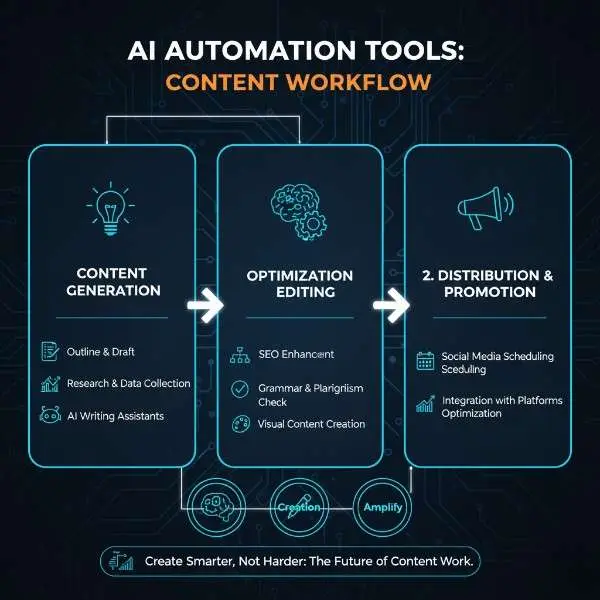
3. First-Draft Creation: The AI expands the outline into a full draft based on top-ranking content and your specific guidelines.
4. Humanizing & Expertise Injection: This is the irreplaceable step. You edit, add personal stories, unique insights, and deeper research.
5. Publishing & Distribution: Use scheduling AI automation tools to post the article, then auto-share snippets to social media and newsletter segments.
This process can cut content creation time by 40-60%, allowing you to scale your site’s authority and traffic—the foundation of ad, affiliate, or lead generation income.
YouTube Video: Best Guide on AI Automation Tools to Increase Income
This video provides a fantastic visual walkthrough of setting up a real-life content automation pipeline, showing you exactly how different AI automation tools hand off tasks to each other.
Revenue Stream 2: Client Services & Agency Scaling
If you sell services, your biggest cap is your billable hours. AI automation tools help you standardize, delegate, and scale.
The Automated Client Onboarding Funnel
Let’s say you’re a marketing consultant. Instead of a messy email chain to onboard a new client, you can automate it:
- Lead Capture: A chatbot on your site, powered by an AI automation tool, qualifies leads by asking about budget, goals, and timeline.
- Proposal and Contract Generation: AI sends a digital contract after populating a pre-built template with the lead’s information.
- Payment and Welcome: An invoice is automatically sent to the client via PayPal or Stripe when they sign, and once they pay, they can access a special portal with an automated welcome video, questionnaire, and first steps.
This professionalism impresses clients and frees you from administrative hell. According to a recent study by HubSpot, companies that automate lead management see a 10%+ increase in revenue within 6-9 months. You can now manage more clients without collapsing.
Revenue Stream 3: E-commerce & Digital Product Efficiency
From drop-shipping to selling your own courses, e-commerce is ripe for automation. The right AI automation tools can handle customer service, personalize marketing, and optimize operations.
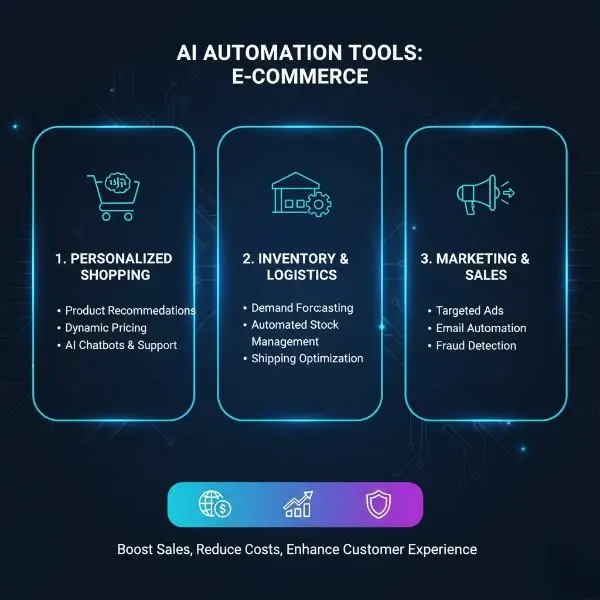
Automating the Customer Journey
Consider an online store selling specialty coffee.
- Post-Purchase: An AI email sequence kicks off, thanking the customer and suggesting a guide on “brew methods.”
- Replenishment: Two weeks later, an AI-driven tool predicts the customer is running low and sends a personalized, timed offer for a reorder.
- Support: A 24/7 AI chatbot answers common questions about shipping, grind size, or storage, resolving issues instantly without you lifting a finger.
- Upsell/Cross-sell: Based on purchase history, the website’s AI plugin dynamically shows “customers who bought this also loved…” recommendations.
These AI automation tools directly boost average order value and customer lifetime value—key metrics for income growth. Check our detailed guide on AI automation tools for email marketing to dive deeper into this workflow.
Critical Tools Breakdown: Your Starter Toolkit
You don’t need every tool. Start with one vertical. Here’s a breakdown of essential types of AI automation tools:
- Writing and Content Assistants: These automation tools based on artificial intelligence help with email drafts, posts on social media, advertisements, and blogs.
- Social Media Schedulers with AI: Beyond just scheduling, these analyze optimal posting times, suggest content based on trends, and even auto-generate captions from a blog link.
- Email Marketing Automation: Segment your list, send behavior-triggered sequences (e.g., abandoned cart, post-purchase series), and personalize content at scale.
- AI Chatbots and Customer Support: Use them on your website to get leads and answer questions right away, lowering customer friction and increasing sales around the clock.
- Process Automation Platforms: Tools like Zapier or Make act as the connective tissue, allowing your different AI automation tools and apps to talk to each other (e.g., “When I get a new form entry, add them to my CRM and send a welcome email”).
The Essential List: Automations to Build This Week
I honestly wish I had started with a simple list like this instead of trying to boil the ocean. Pick one of these automations to implement:
- Set up a welcome email sequence for new subscribers using an AI automation tool to personalize the first message based on how they found you.
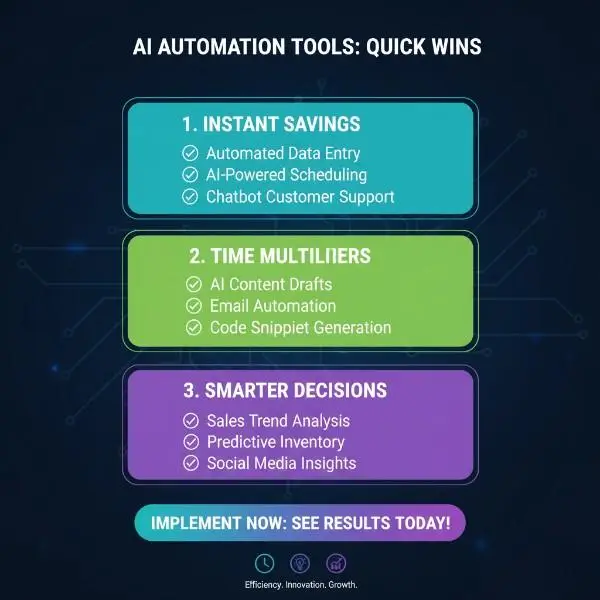
- Create a social media content bank by using an AI writer to generate a month’s worth of post ideas and captions based on your top-performing content.
- Build a lead qualification chatbot that asks website visitors three key questions and directs them to a booking page or a specific resource.
- Automate your invoicing and payment reminders so you get paid faster without awkward follow-up emails.
- Use an AI automation tool to transcribe and create summary notes from your client calls, saving hours of manual note-taking.
Avoiding the Pitfalls: Staying Human in an Automated World
Automation fails when it feels robotic. I learned this the hard way by setting up an email sequence that was so efficient it sounded cold. The key is to use AI automation tools for the framework, not the soul.
- Always Personalize the Touchpoints: Use merge tags for names, and manually add a PS or a short personal video to key automated emails.
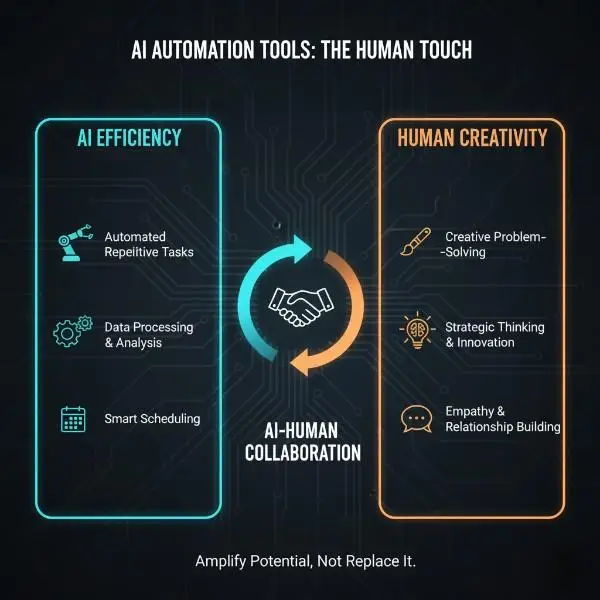
- Audit and Optimize: Review your automations quarterly. Is the chatbot answering correctly? Are the email sequences converting? AI automation tools need guidance.
- Focus on Strategy, Not Just Tasks: Your value is in the big picture—the creative direction, the client relationship, the strategic analysis. Let the AI automation tools handle the “how,” while you master the “why.”
Conclusion: Your Time Is Your New Currency
Ultimately, integrating AI automation tools is an investment in your most precious asset: your time and mental bandwidth. It’s about moving from a state of constant doing to a space of strategic thinking and creating. The goal isn’t a fully passive income; it’s an actively managed, highly leveraged one where your effort yields exponentially greater results.
What’s the first repetitive task in your workflow that you’ll hand off to an intelligent system? The journey to a higher, more sustainable income begins with that single decision. Start small, stay consistent, and always infuse your unique humanity into the machine. Ready to explore your first automation? Browse our reviews of the top-rated AI automation tools for beginners and take your first step today.
FAQs: AI Automation Tools
Q1: What exactly are AI automation tools?
A: AI automation tools are software applications that use artificial intelligence to perform repetitive, rule-based tasks without constant human intervention. Think of them as smart digital assistants that can handle things like content scheduling, email responses, data analysis, and customer service chats, freeing up your time for higher-value work.
Q2: How can AI automation tools directly help me increase my income?
A: These tools boost income primarily by creating efficiency and scale. They save you dozens of hours per month, allowing you to take on more clients or projects. Furthermore, they can unlock new revenue streams—like personalized email marketing that drives more sales or a chatbot that generates leads 24/7—that are difficult to manage manually.
Q3: Are AI automation tools expensive or difficult to set up?
A: Not necessarily. Many powerful AI automation tools offer free or low-cost entry tiers perfect for beginners. While some advanced setups require technical know-how, most modern platforms are designed with user-friendly, no-code interfaces. You can often start with simple automations in under an hour.
Q4: What’s the biggest risk of relying on AI automation tools?
A: The main risk is losing the human touch. Over-automation can make your business interactions feel robotic and impersonal. The key is to use these tools to handle the backend processes and repetitive tasks, while you personally manage strategy, creative direction, and genuine customer relationships.
Q5: Which area is the best to start automating first?
A: Start with your biggest “time leak.” For most people, this is either marketing/social media scheduling or client communication/email management. Implementing AI automation tools in the area that currently drains your most valuable hours typically delivers the fastest and most noticeable return on investment.
Pingback: AI’s Moving Faster Than Retails Understanding Of It