
Introduction
Quantum Computing Future isn’t just a buzzword for scientists in lab coats—it’s the silent, gathering storm that will redefine the fabric of our daily lives. Have you ever stared at a loading icon, willing your computer to go faster, or felt a pang of helplessness when a loved one faced a disease modern medicine couldn’t crack? I have. It’s in those moments of human limitation that the true promise of the quantum computing future shines its most hopeful light. This isn’t about incremental upgrades; it’s about handing humanity a completely new toolkit for the universe’s most complex puzzles. Let’s move beyond the hype and explore what this seismic shift will truly feel like.
The Unseen Engine: Why Your Laptop Can't Do This
I remember helping my nephew with his 8th-grade science fair project on transistors. We marveled at how these microscopic switches, billions strong, power everything from smartphones to satellites. Yet, that evening, as the news detailed another stalled effort in battery research, it hit me: we’re asking these classical computers to simulate nature itself, and they’re struggling. Nature doesn’t operate in simple 1s and 0s. It’s probabilistic, with particles existing in multiple states at once until observed.
This is the core of the coming quantum computing future. Instead of bits, we use qubits. Imagine a spinning coin. A classical bit is either heads (1) or tails (0). A qubit is that coin while it’s still spinning—a fluid superposition of both states. Link qubits together through quantum entanglement (a connection Einstein famously called “spooky action at a distance”), and their processing power doesn’t just add up; it explodes exponentially.
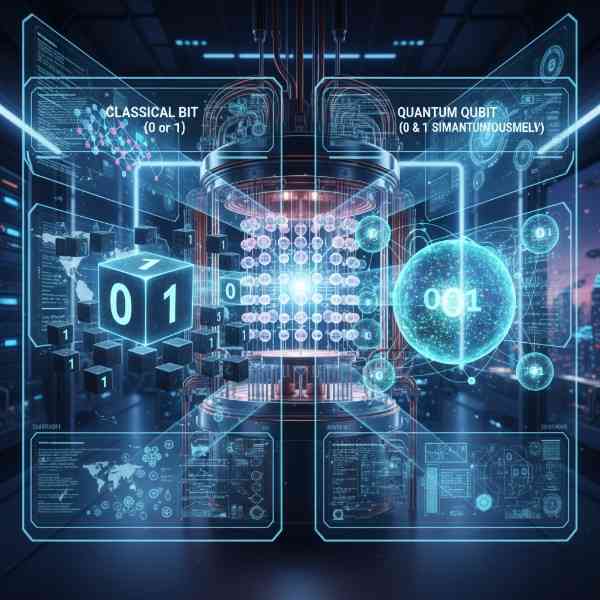
This fundamental difference is what unlocks a new tier of possibility, making the quantum computing future not just faster, but categorically different.
Healing the Unhealable: A Medical Revolution
My friend, a researcher in oncology, once shared her frustration. “We have oceans of genomic data,” she said, “but mapping a single protein’s folding dynamics can take our supercomputer cluster years.” Misfolded proteins are linked to diseases like Alzheimer’s and Parkinson’s. Today’s tools are like trying to piece together a billion-piece jigsaw puzzle in the dark.
Simulating Molecules at Quantum Scale
The first practical step in this quantum computing future will be the precise simulation of molecules. Quantum computers are quantum systems, making them perfect for modeling other quantum systems like complex molecules.
- Drug Discovery: They could analyze and simulate the interaction between drugs and every protein in the human body in days, not decades, leading to personalized medicine and cures for diseases that have plagued us for centuries.
- Materials Science: We could design new catalysts to pull carbon directly from the atmosphere or create room-temperature superconductors, revolutionizing energy transmission.
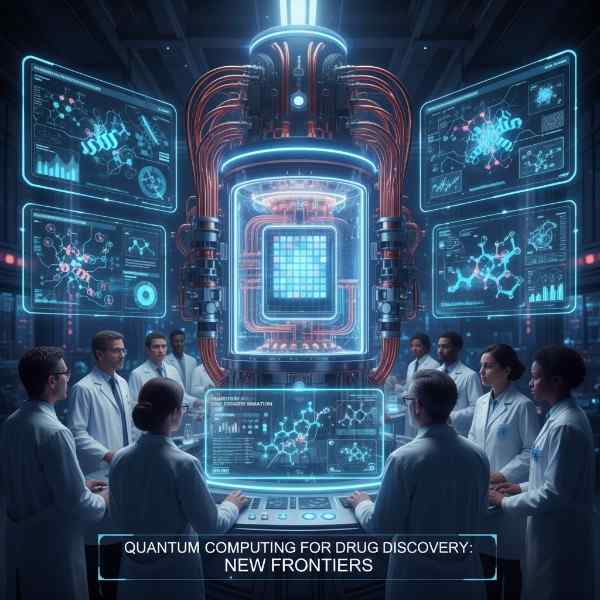
This facet of the quantum computing future is deeply personal. It’s about turning the “incurable” into the “treatable.”
The Double-Edged Sword: Cybersecurity and the Quantum Break
Think about the last time you entered a password or made an online payment. Your security likely rests on RSA or ECC encryption—complex math problems that would take a classical computer billions of years to crack. It feels safe. But here’s a sobering observation from my chats with cybersecurity experts: this entire digital trust model has an expiration date, and the quantum computing future is the timer.
Post-Quantum Cryptography: The Urgent Upgrade
Shor’s algorithm, run on a sufficiently powerful quantum computer, could break current public-key encryption in hours. This doesn’t just risk your email; it threatens national security and global financial systems.
- The race isn’t just to build these machines but to transition the world to “quantum-resistant” cryptographic algorithms before the break happens.
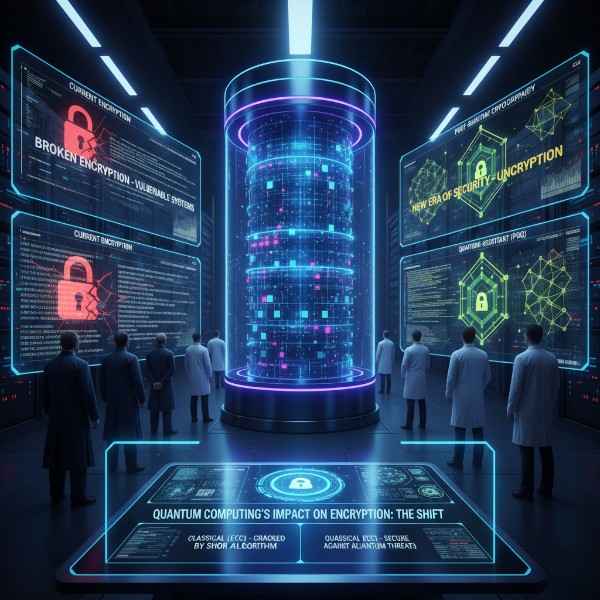
- Governments and corporations are already starting this mammoth migration. This dimension of the quantum computing future is a silent, urgent reboot of our digital world’s foundations.
YouTube Video: Best Guide on How Quantum Computing Will Change the World
This visual breakdown perfectly demystifies how qubits work and why their power is so revolutionary, complementing the concepts we’re exploring here.
Supercharging Artificial Intelligence
We all interact with AI daily—from Netflix recommendations to smart assistants. But today’s AI has a bottleneck: it’s incredibly data-hungry and energy-intensive to train. I once watched a training model for autonomous driving churn for weeks, iterating through countless scenarios. The quantum computing future promises to supercharge this process.
Quantum Machine Learning (QML)
Quantum algorithms can process information in radically parallel ways, potentially finding patterns in vast datasets that are invisible to classical AI.
- This could lead to AI that discovers new scientific laws from raw data, creates hyper-efficient logistics networks for global shipping, or models climate change with breathtaking accuracy.
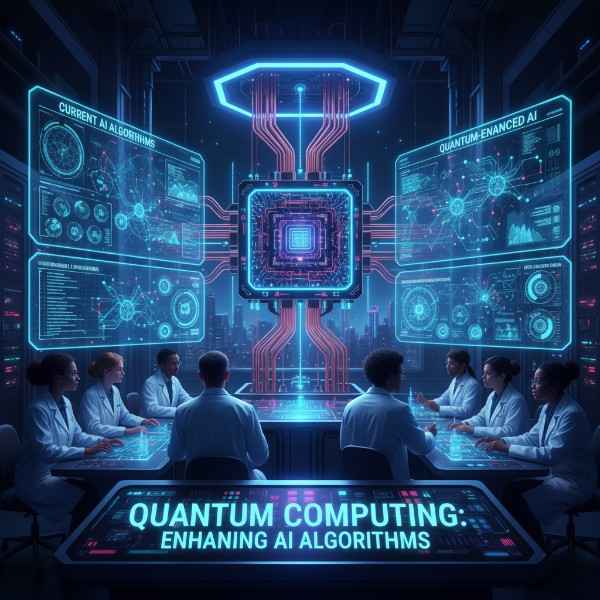
- The synergy between AI and quantum computing will accelerate innovation cycles in every field, making this aspect of the quantum computing future a universal accelerant.
Transforming Finance and Managing Complexity
During the 2008 financial crisis, the complexity of interconnected derivatives brought the system to its knees. Modern portfolios and risk models are still limited by classical computation. The quantum computing future will bring a new level of sophistication to managing chaos.
Optimizing the Unoptimizable
Quantum computers excel at solving optimization problems—finding the best solution from a near-infinite set of possibilities.
- Portfolio Optimization: They could balance risk and return across thousands of assets in real-time, considering global market correlations no human ever could.
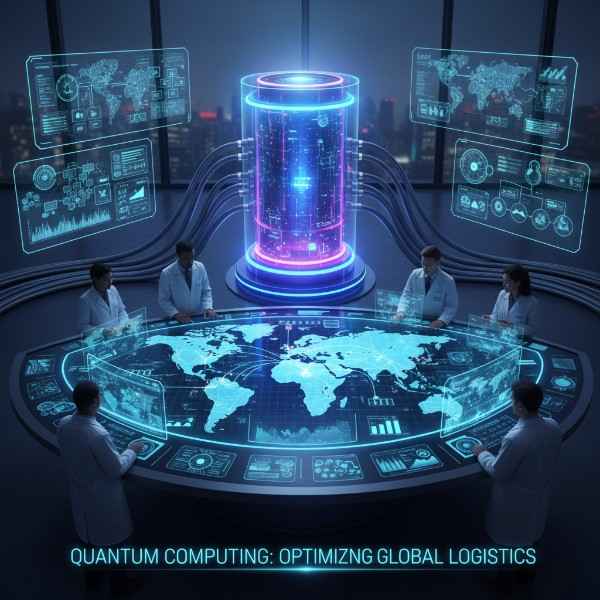
- Logistics & Supply Chains: Imagine optimizing the entire global flight schedule or a continent-wide delivery network for minimum fuel and maximum efficiency. This application of the quantum computing future will make our complex world run smoother and greener.
When Will This Future Arrive? The Road Ahead
“Is this sci-fi, or is it next year?”. In point of fact, we are currently living in the noisy intermediate-scale quantum (NISQ) era. Current machines are prone to errors (decoherence) and require near-absolute zero temperatures. The quantum computing future isn’t a single event but a gradient. We’ll see:
- Quantum Advantage: Solving a specific, useful problem faster than any classical computer. This has been demonstrated in narrow tasks.
- Fault-Tolerant Quantum Computing: The holy grail—large-scale, error-corrected machines for general problems. Most experts place this 10-15 years out.
Major players like IBM, Google, and startups are in a fierce race. According to experts at Forbes, investment is soaring, and quantum computing as a service (QCaaS) is already allowing researchers to experiment via the cloud. Check detailed guide on “Understanding Qubits” for a deeper dive into the hardware.
Industries on the Brink of Change: A Practical List
Let’s make the quantum computing future tangible. Here’s a breakdown of sectors facing imminent transformation:
- Chemistry & Materials: Designing better fertilizers to feed the world, next-generation batteries for EVs, and novel superconductors. This is a cornerstone of the sustainable quantum computing future.
- Aerospace: Simulating aerodynamic flow for radically more efficient aircraft designs and optimizing mission trajectories to Mars.
- Energy: Modeling fusion reactor plasma behavior to make clean, limitless energy a reality, a key hope in the quantum computing future.
- Transportation: Solving urban traffic flow as a single optimization problem, eliminating gridlock. The quantum computing future will reshape our cities.
- Climate Science: Creating hyper-accurate climate models to predict regional impacts and engineer effective geoengineering solutions.
The Human Factor: Challenges and Ethical Considerations
I honestly wish I had learned earlier that every powerful tool requires wise stewardship. The quantum computing future isn’t without its shadows. Beyond breaking encryption, it raises questions:
- Access and Disparity: Will this technology further consolidate power, resulting in a “quantum divide”?
- Job Displacement: As with any automation, new roles will emerge, but the transition must be managed with care.
- Dual-Use Dilemmas: The same power to design life-saving drugs could, in theory, design novel toxins.
A recent study on Wikipedia details the global efforts to establish ethical guidelines for AI and quantum tech. We must build the ethical framework alongside the hardware.
Conclusion: A Future We Shape
The trajectory of the quantum computing future is being written now, in labs and boardrooms. It holds a mirror to our ambitions and our fears. This isn’t just a story of faster processors; it’s a narrative about expanding the boundaries of human knowledge and capability. From healing our bodies to securing our data and healing our planet, the potential is as vast as the quantum realm itself.
Which issue do you think a quantum computer should first address? The answer to that question may shape the coming decades. I’d love to hear your thoughts in the comments below. If you found this exploration helpful, consider sharing it with someone curious about where technology is headed next. The quantum computing future is coming—and understanding it is our first step toward shaping it wisely.
FAQs: Your Quantum Computing Future Questions Answered
Q1: When will the quantum computing future actually impact my daily life?
A: The quantum computing future will arrive in stages. While mainstream use is likely a decade away, its indirect impact is already starting through advanced materials and drug discovery. You’ll likely experience its benefits first through new medicines, ultra-secure communications, and dramatically improved batteries long before a quantum chip is in your personal device.
Q2: Will quantum computers make my current computer obsolete?
A: No. The quantum computing future is about specialization, not replacement. Your laptop and smartphone will remain ideal for everyday tasks. Quantum computers will act as powerful co-processors for solving specific, hyper-complex problems in science and industry that are impossible for classical machines, working in tandem with them.
Q3: What’s the biggest hurdle to achieving the full quantum computing future?
A: The primary challenge is maintaining qubit stability (preventing “decoherence”). Qubits are extremely sensitive to heat and electromagnetic interference. Building large-scale, error-corrected quantum computers that can run practical algorithms reliably is the key engineering and scientific hurdle to realizing the full quantum computing future.
Q4: How can I prepare for a career in the quantum computing future?
A: Building the quantum computing future requires diverse skills. Foundational knowledge in physics, mathematics, and computer science is crucial, but so is expertise in software engineering, algorithm development, and even specific fields like chemistry or finance where quantum will be applied. Start with online courses in linear algebra and quantum mechanics basics.