
Introduction
How to become a prompt engineer is the question on the lips of every tech-curious professional looking toward the future. I remember the first time I coaxed a stunning, detailed image from a text-to-AI model with just a few carefully chosen words; it felt like unlocking a secret superpower. That moment of magic, of truly communicating with an artificial intelligence, is at the heart of this emerging field. If you’ve ever wondered how to transform your curiosity into a tangible, in-demand career, you’re in the right place. This guide is your comprehensive blueprint for navigating the exciting journey of how to become a prompt engineer.
The “Aha!” Moment: What Prompt Engineering Really Is
Let me paint a picture. Early in my exploration, I asked an AI to “write a story.” It gave me a generic, three-paragraph fairy tale. Then, I refined my request: “Write a 500-word cyberpunk noir story in the style of Raymond Chandler, featuring a disillusioned AI therapist who discovers a conspiracy in the neural nets of the city’s elite. End with a cryptic, open-ended line.” The result was night and day—atmospheric, genre-perfect, and utterly unique. That’s the difference between asking and engineering.
Prompt engineering isn’t about knowing magical words. It’s the structured discipline of crafting inputs (prompts) to guide large language models (LLMs) and generative AI tools toward producing precise, high-quality, and reliable outputs. It’s part linguistics, part psychology, and part technical understanding.
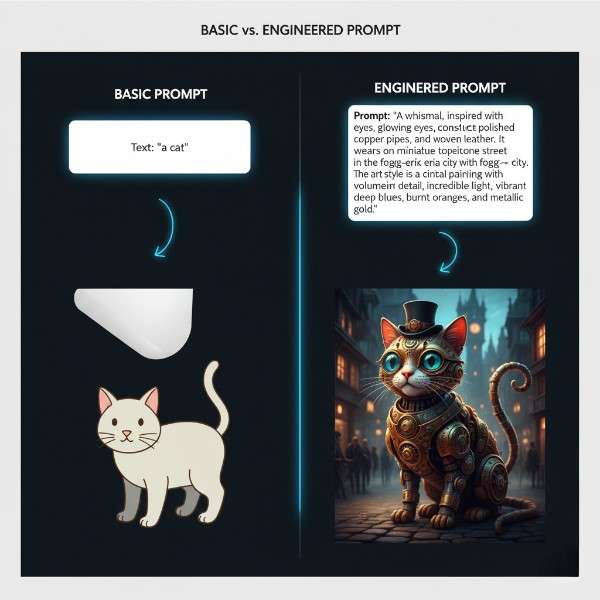
A professional in this field doesn’t just ask questions; they design the conversation. Understanding this core principle is the first major step in learning how to become a prompt engineer who stands out.
Demystifying the Role: What Does a Prompt Engineer Actually Do?
There’s a lot of hype, so let’s ground it in reality. A prompt engineer is a bridge between human intent and machine capability. In a practical sense, their daily work involves designing, testing, and refining prompts to achieve specific goals. This could mean developing a series of prompts that enable a customer service chatbot to handle complex complaints with empathy, or creating templates that help a marketing team generate consistent, on-brand ad copy.
A recent study suggests that the effectiveness of an AI application is often limited not by the model’s power, but by the quality of its prompts. According to experts at places like Anthropic and OpenAI, the role involves deep iterative testing—what they call “prompt optimization.” You’ll be analyzing where the AI fails, hypothesizing why, and crafting a better prompt. This systematic approach is central to the real-world process of how to become a prompt engineer. It’s less about secret codes and more about methodical experimentation and clear communication
The Non-Negotiable Foundation: Core Skills You Need to Cultivate
You don’t need a PhD in computer science, but you do need a specific blend of hard and soft skills. Let’s break them down.
Technical & Analytical Skills
While you won’t be coding complex algorithms daily, a foundational understanding is crucial.
- Understanding of AI & LLMs: You don’t need to build them, but you must grasp how they work—what a token is, how training data influences outputs, and the basics of model limitations (like “hallucinations”).
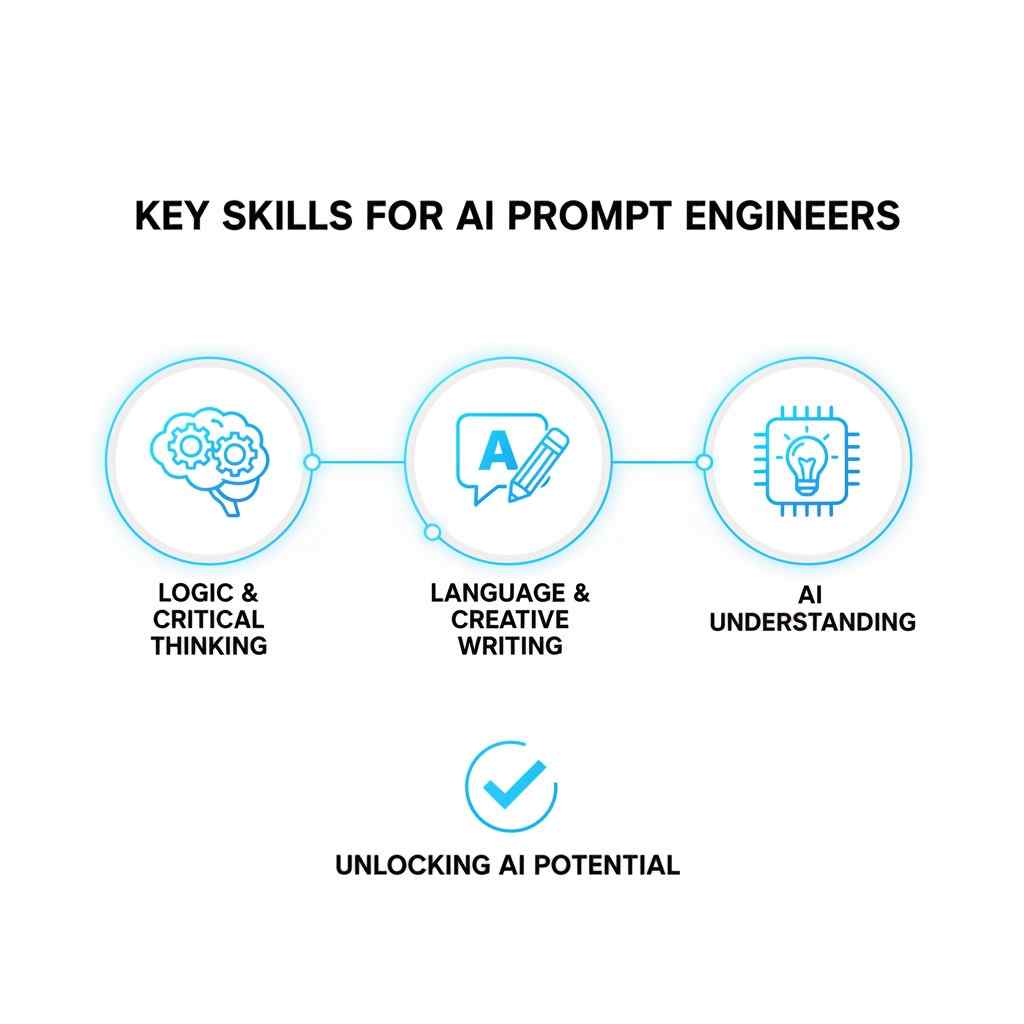
- Logical Thinking & Structured Problem-Solving: Prompting is iterative. You must deconstruct a desired outcome into logical steps the AI can follow (e.g., “Step 1: Identify the main argument. Step 2: Summarize it in one sentence. Step 3: Translate that sentence into French.”).
- Basic Familiarity with Tools: Experience with platforms like ChatGPT, Claude, Midjourney, and their advanced features (like system prompts, temperature settings) is essential.
The Human-Centric Skills
This is where the art comes in, and where many technically-minded folks need to practice.
- Exceptional Language & Communication: This is paramount. You need a rich vocabulary, a grasp of tone, style, and nuance. Can you clearly articulate the difference between “concise,” “succinct,” and “brusque”? The AI will respond to those differences.
- Creativity & Patience: The best prompts often come from creative, lateral thinking. You also need the patience of a scientist running experiments, documenting what works and what doesn’t.
Here is a foundational learning path for someone figuring out how to become a prompt engineer:
- Master the basics of a leading LLM interface (like ChatGPT Plus).
- Deep-dive into prompt structures and techniques (chain-of-thought, few-shot prompting).
- Practice relentlessly with clear, iterative goals.
- Learn to analyze and document your prompt performance.
YouTube Video: Best Guide on How to Become an AI Prompt Engineer
This video provides a fantastic visual walkthrough of advanced prompting techniques, perfectly complementing the foundational knowledge we’re building here.
Your Hands-On Learning Roadmap: From Beginner to Pro
Theory is nothing without practice. Here’s your action plan.
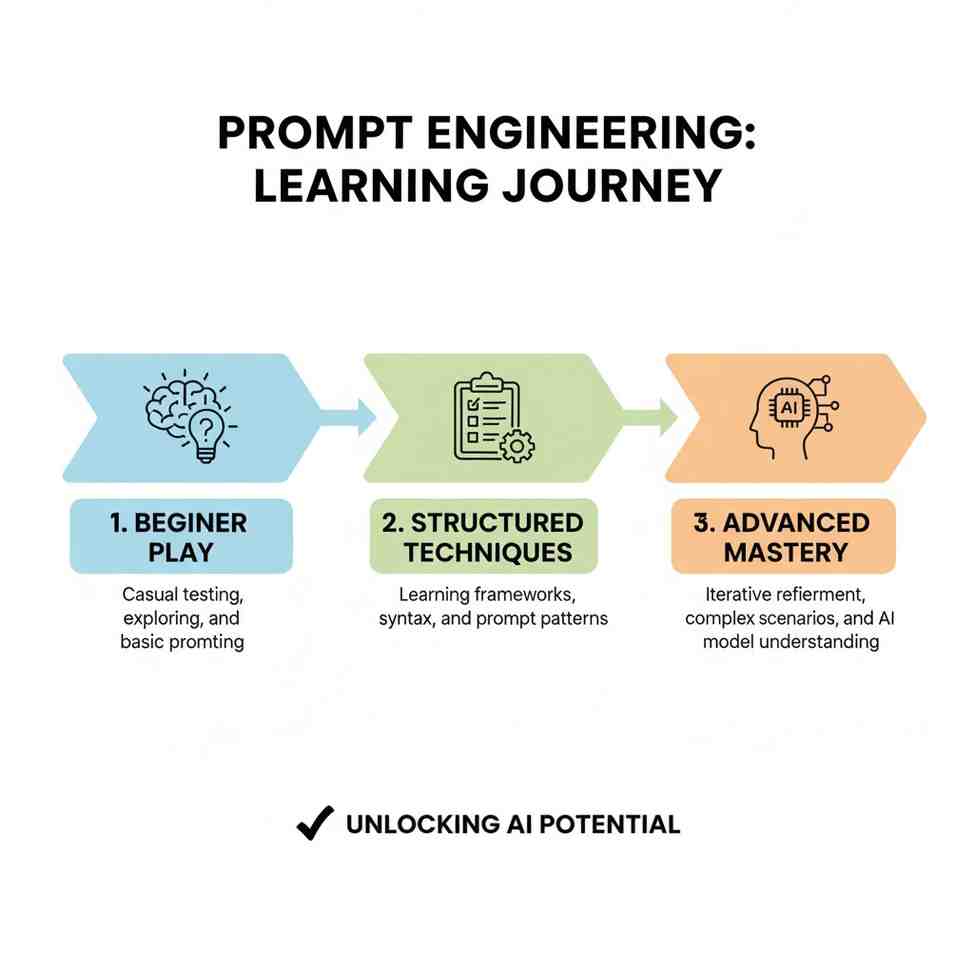
Phase 1: Immersion & Play (Weeks 1-4)
Don’t aim for perfection. Aim for exploration. Spend at least an hour daily interacting with AI. Give it weird tasks. Ask it to explain its own reasoning. Try to break it. Notice patterns. Check our detailed guide on effective prompting techniques to structure this play. This hands-on tinkering is the most critical part of understanding how to become a prompt engineer.
Phase 2: Structured Learning & Technique (Weeks 5-8)
Now, get systematic. Learn formal techniques:
- Role Prompting: “Act as an experienced SEO content strategist…”
- Chain-of-Thought: “Let’s think step by step…”
- Few-Shot/Zero-Shot Prompting: Providing examples vs. not.
- Dedicate time to courses from platforms like Coursera or DeepLearning.AI. A prompt engineering certification can provide structure and credibility to your learning.
Building Your Proof: The Portfolio That Gets You Hired
No one will hire you based on a claim. They will hire you based on proof. Your portfolio is your greatest asset.
What to Showcase in Your Portfolio
Forget the fluff. Create a simple website or GitHub repo that displays:
- Case Studies: “Here was the complex task (e.g., generate 50 unique product descriptions following a specific brand voice). Here were my initial prompts. Here were the results. Here’s how I iterated and improved the output by 70%.”
- Prompt Libraries: Showcase categorized prompts you’ve crafted for different uses (creative writing, code debugging, data analysis).
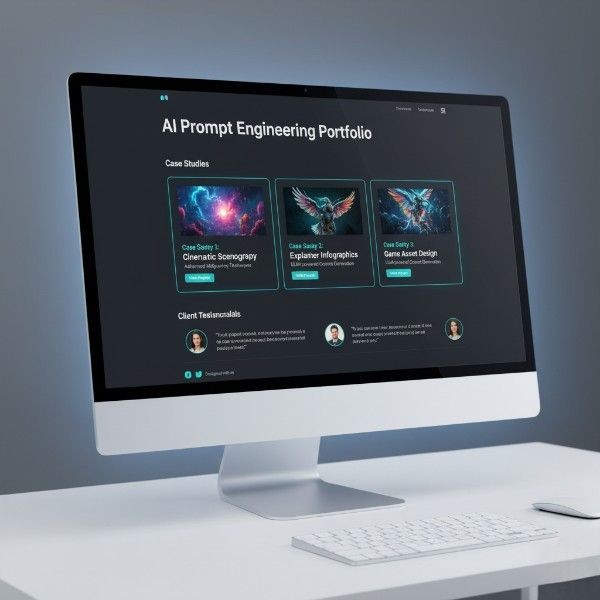
3.Before/After Examples: Visually demonstrate the power of a well-engineered prompt versus a basic one.
This portfolio directly demonstrates your journey and competence in how to become a prompt engineer. It answers the hiring manager’s question before they ask it. You may also find this helpful when looking for portfolio inspiration from other creative tech fields.
Navigating the Job Market: Titles, Opportunities, and Applications
The job title might not always be “Prompt Engineer.” Look for roles like: AI Content Strategist, LLM Interaction Designer, AI Trainer, or Conversational AI Designer. Opportunities exist at AI-native companies, large enterprises building internal AI tools, and as a freelance consultant helping small businesses leverage AI.
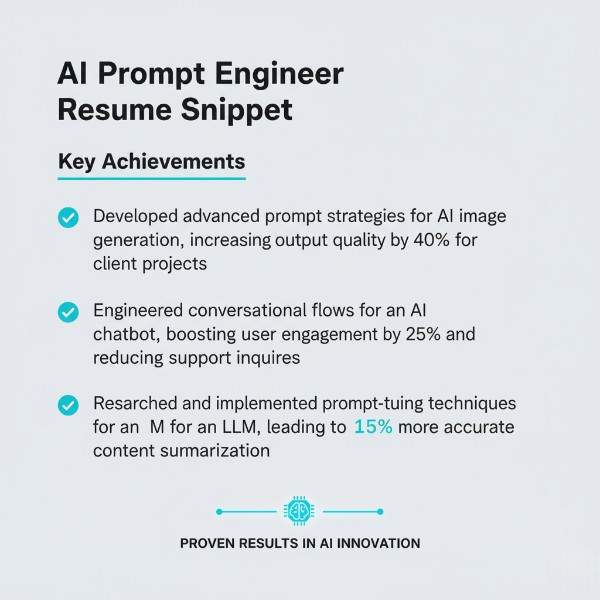
When applying, tailor your cover letter. Don’t just say you know prompting. Say: “I saw you need to improve your chatbot’s accuracy. In my portfolio, Case Study #3, I reduced misunderstanding rates by 40% using a multi-step validation prompt technique I developed.” This shifts the conversation from “if” you can do the job to “how” you will solve their problem. This strategic approach is the final, crucial step in how to become a prompt engineer who lands the job.
The Future-Proof Mindset: Staying Relevant in a Fast-Moving Field
I truly wish someone had told me sooner that in AI, your learning is never “done.” The models will evolve, new techniques will emerge, and today’s best practice might be obsolete in a year.
Cultivate a mindset of continuous learning. Follow leading AI researchers on social media. Participate in communities like Discord servers or forums where practitioners share breakthroughs. Regularly revisit your old prompts and see if new model updates allow you to achieve the same result more efficiently. The career of how to become a prompt engineer is a marathon of constant adaptation, not a sprint to a finish line.
Conclusion
The path of how to become a prompt engineer is uniquely accessible yet profoundly deep. It rewards curiosity, clear thinking, and a willingness to engage in a continuous dialogue with some of the most fascinating technology of our time. It starts with a single, well-crafted question—to yourself and to the AI. What problem will you solve first? What creative vision will you bring to life through precise instruction?
I’d love to hear from you: What’s the first project or challenge you’ll use to start practicing your prompt engineering skills today? Share your thoughts in the comments below. If you’re ready to take the next step, consider joining a dedicated community or course to accelerate your journey. The future of human-AI interaction is being written now, and you have the chance to help write it
Frequently Asked Questions (FAQs)
Q:1 Do I need a programming or computer science degree to become a prompt engineer?
A: Not necessarily. While a technical background is beneficial for understanding how AI models work, the core skills are exceptional language mastery, logical thinking, and creative problem-solving. Many successful prompt engineers come from fields like writing, marketing, linguistics, or psychology. The key is a demonstrated ability to communicate effectively with AI through a strong portfolio.
Q:2 How long does it realistically take to land a job as a prompt engineer?
A: This depends on your starting point and dedication. With focused, daily practice and portfolio building, a motivated learner can develop foundational competency in 3-6 months. Building a professional portfolio and networking within AI communities are crucial steps that follow skill acquisition. Treat it like learning a new professional discipline.
Q:3 Are prompt engineering certifications worth it?
A: Certifications from reputable platforms (like Coursera, Udacity, or industry leaders) can provide structured learning, validate your knowledge to employers, and give you a confidence boost. However, they are not a magic ticket. A robust portfolio of real-world projects will always be the most compelling evidence of your skills.
Q:4 Is this career future-proof, or will AI learn to prompt itself?
A: While AI interfaces will become more intuitive, the human role will evolve rather than disappear. The need for specialists who can design complex, reliable, and ethical AI interactions, optimize systems for specific business needs, and push the boundaries of creative collaboration will grow. The role may shift towards “AI Interaction Designer” or “LLM Optimizer.”
Q:5 What’s the best way to start practicing today?
A: Immediately pick a tool (like ChatGPT or Claude) and set a specific, small project. For example, “Prompt the AI to help me plan a weekly meal plan for a family of four, considering a gluten-free diet and a budget of $150.” Document your prompts, iterate based on the results, and focus on the process of refinement. Consistent, goal-oriented practice is the single most effective method.